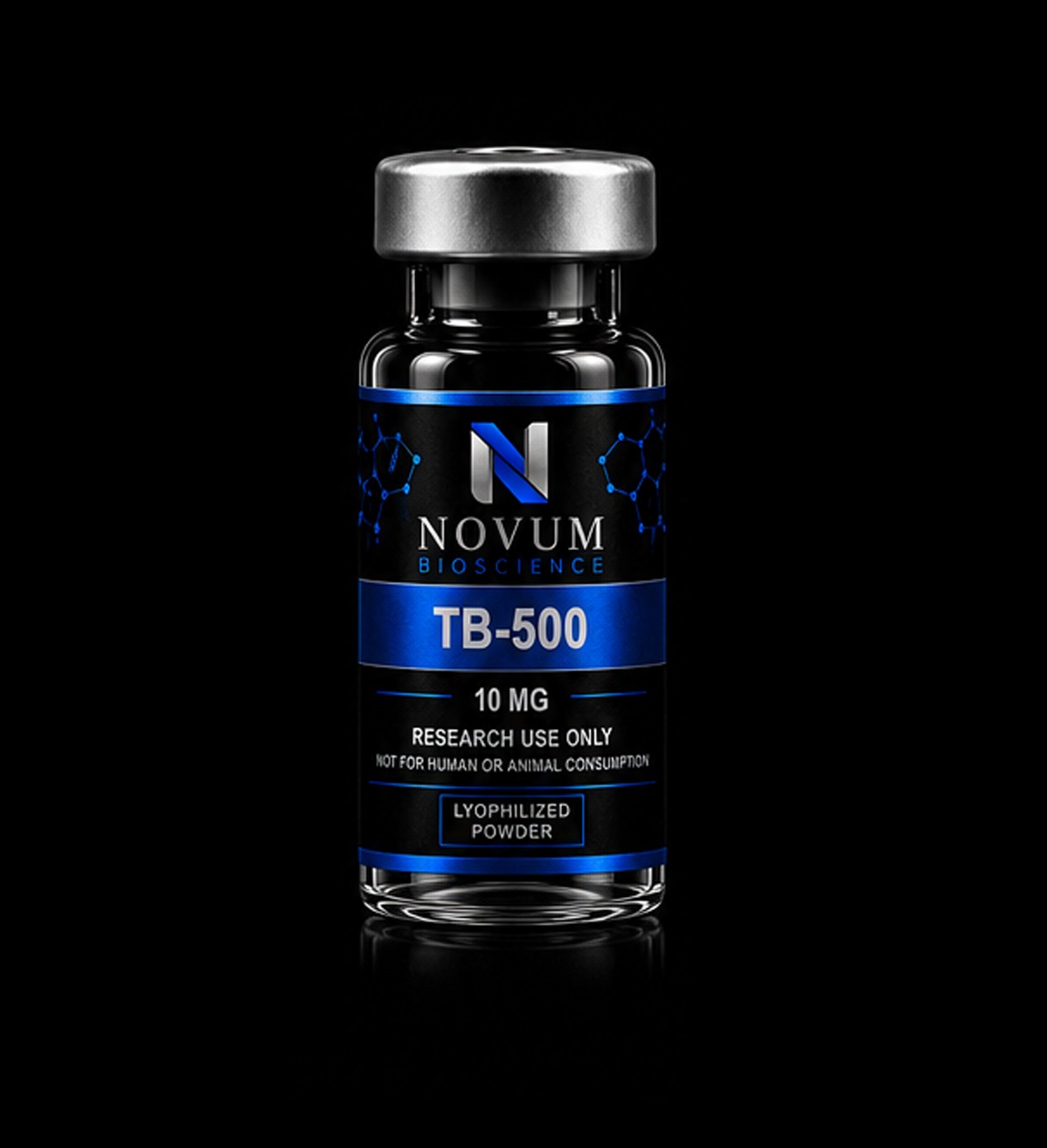
TB-500 10mg
Original price was: $90.00.$80.00Current price is: $80.00.
- Description
- SIDE EFFECTS
- DOSAGES
Description
Novum BioScience TB 500 10mg
TB-500 (Thymosin Beta-4) is a synthetic peptide version of a naturally occurring protein present in virtually all human and animal cells. Composed of 43 amino acids, this peptide plays a crucial role in tissue repair, regeneration, and healing throughout the body by regulating cell structure and mobility.
The peptide works primarily by binding to actin, a protein that forms the structural framework of cells, thereby promoting cell migration, differentiation, and the formation of new blood vessels (angiogenesis). This mechanism allows TB-500 to accelerate healing, reduce inflammation, and improve flexibility in connective tissues. It also upregulates beneficial proteins like keratin and collagen while downregulating inflammatory pathways.
Research suggests TB-500 offers numerous benefits including enhanced wound healing, reduced recovery time from injuries, improved flexibility and range of motion, decreased inflammation, and protection against tissue damage. Studies have shown particular effectiveness in healing muscles, tendons, ligaments, and even cardiac tissue. Its systemic effects and ability to promote tissue regeneration throughout the body have made it increasingly popular in sports medicine and regenerative therapies.
-
TB-500 (synthetic thymosin beta-4) is generally well-tolerated, with most reported side effects being mild and transient. Common adverse reactions include injection-site irritation (redness, swelling, tenderness), transient fatigue, mild headaches, and occasional lightheadedness or dizziness, particularly during the initial loading phase.
-
Injection Site Reactions: The most frequent side effect is localized redness or swelling, which typically resolves within 24–48 hours.
-
Systemic Symptoms: Some users experience brief fatigue or “head fog” in the first week as the body adjusts to increased healing activity.
-
Theoretical Risks: TB-500 promotes angiogenesis (new blood vessel formation), posing a theoretical risk for individuals with active cancer or a history of malignancy, as it could potentially support tumor growth.
-
Regulatory Status: TB-500 is not FDA-approved for human use and is banned by WADA for competitive athletes. Long-term human safety data is limited, with the longest published follow-up being only 180 days
-
TB-500 (thymosin beta-4) dosage varies significantly by protocol, ranging from 500 mcg to 1000 mcg daily to 2–5 mg weekly, depending on whether the user prioritizes gradual titration or a loading phase.
Standard Gradual Protocol (Daily) This approach uses daily subcutaneous injections to gradually increase dosage over 8–12 weeks.
-
Weeks 1–2: 500 mcg daily (15 units on a U-100 syringe if reconstituted at 3.33 mg/mL).
-
Weeks 3–4: 600 mcg daily.
-
Weeks 5–8: 750 mcg daily.
-
Weeks 9–12: 1000 mcg daily.
Clinical/Loading Protocol (Weekly) Often used for acute injuries or stacked with BPC-157, this method uses higher, less frequent doses.
-
Loading Phase: 2–5 mg per week, split into 2–3 injections.
-
Maintenance Phase: 1–2.5 mg every 1–2 weeks.
-
Typical Stack Dose: When combined with BPC-157, TB-500 is often dosed at 2.5 mg once weekly or 1 mg twice weekly.
Important Considerations
-
Reconstitution: A 10 mg vial is typically reconstituted with 3.0 mL of bacteriostatic water, yielding ~3.33 mg/mL.
-
Regulatory Status: TB-500 is not FDA-approved for human use and is banned by WADA for athletic competition.
-
Administration: Injected subcutaneously (subQ) or intramuscularly (IM); rotation of injection sites is recommended.